Bring clients back

The clients you already have,
back on the calendar.

Reminders, recalls and follow-ups that run on the booking itself, one thread per client across text, email and calls, and an opt-out that lands everywhere at once.

Book a demo
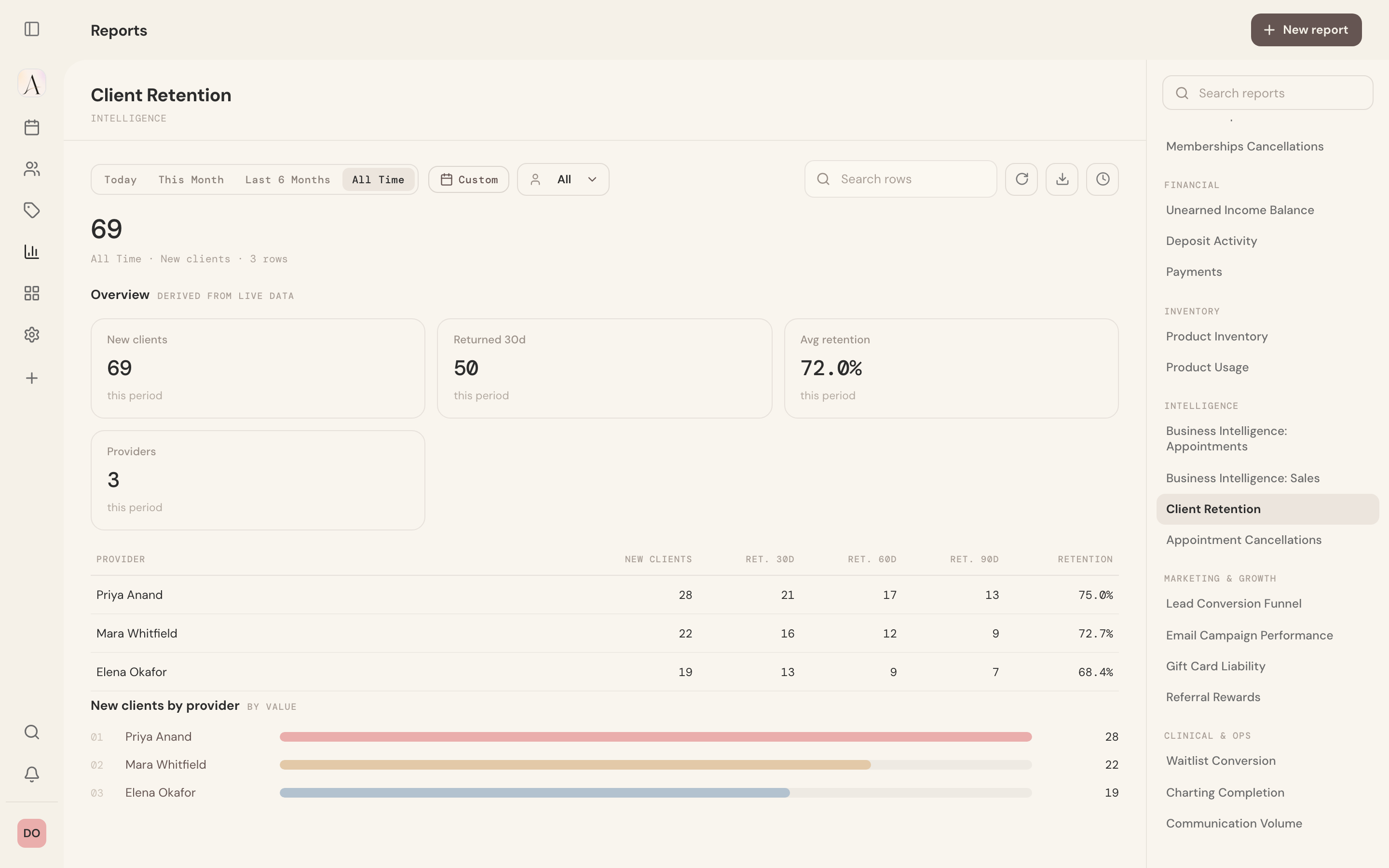
The Client Retention report: new clients, the share who returned within thirty days, average retention, and return rates at 30, 60 and 90 days broken down by provider.

Why bringing clients back works

The next visit is booked by the last one.

Every reminder, recall and follow-up runs off a booking your team already made, so keeping a calendar full stops being somebody's Monday morning job.

Nothing depends on remembering

Flows fire on real clinic events (booked, cancelled, completed, lapsed) rather than on a list somebody keeps by hand.

One thread, whoever answers

Texts, emails and calls land on the client's record, so the next person to pick it up can see what was already said.

Reached, not worn out

One opt-out suppresses every marketing channel at once and a frequency cap holds the rest, while reminders, which are not marketing, keep going.

One gap, from open to closed

From the reminder to the seat filled again.

Follow one booking as it is confirmed, falls out anyway, and is won back by a message nobody had to remember to send.

  1. The reminder does the asking

    Confirmations and reminders run on the appointment's own clock, on the channel the client agreed to, and a reply confirms or reschedules without anyone picking up the phone.

  2. What falls out is written down

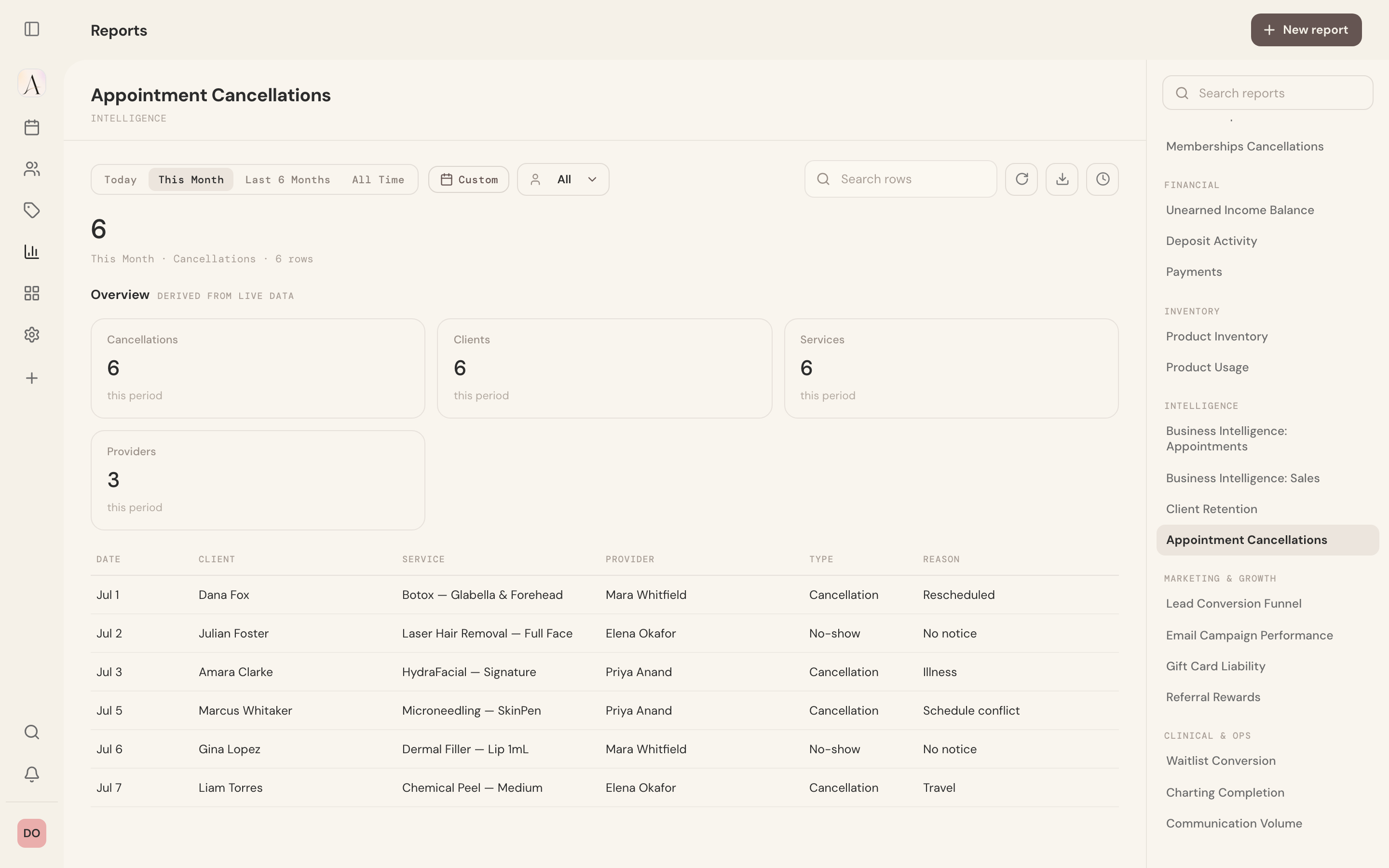
    A cancellation, a reschedule or a no-show is recorded with its reason and its provider, so the seat can be refilled and the client can be asked back rather than quietly lost.

  3. One message, on her channel, in her record

    The win-back goes out when she passes her own interval, her reply lands on the same thread, and the booking it produces is written back against it.

  4. The calendar answers for itself

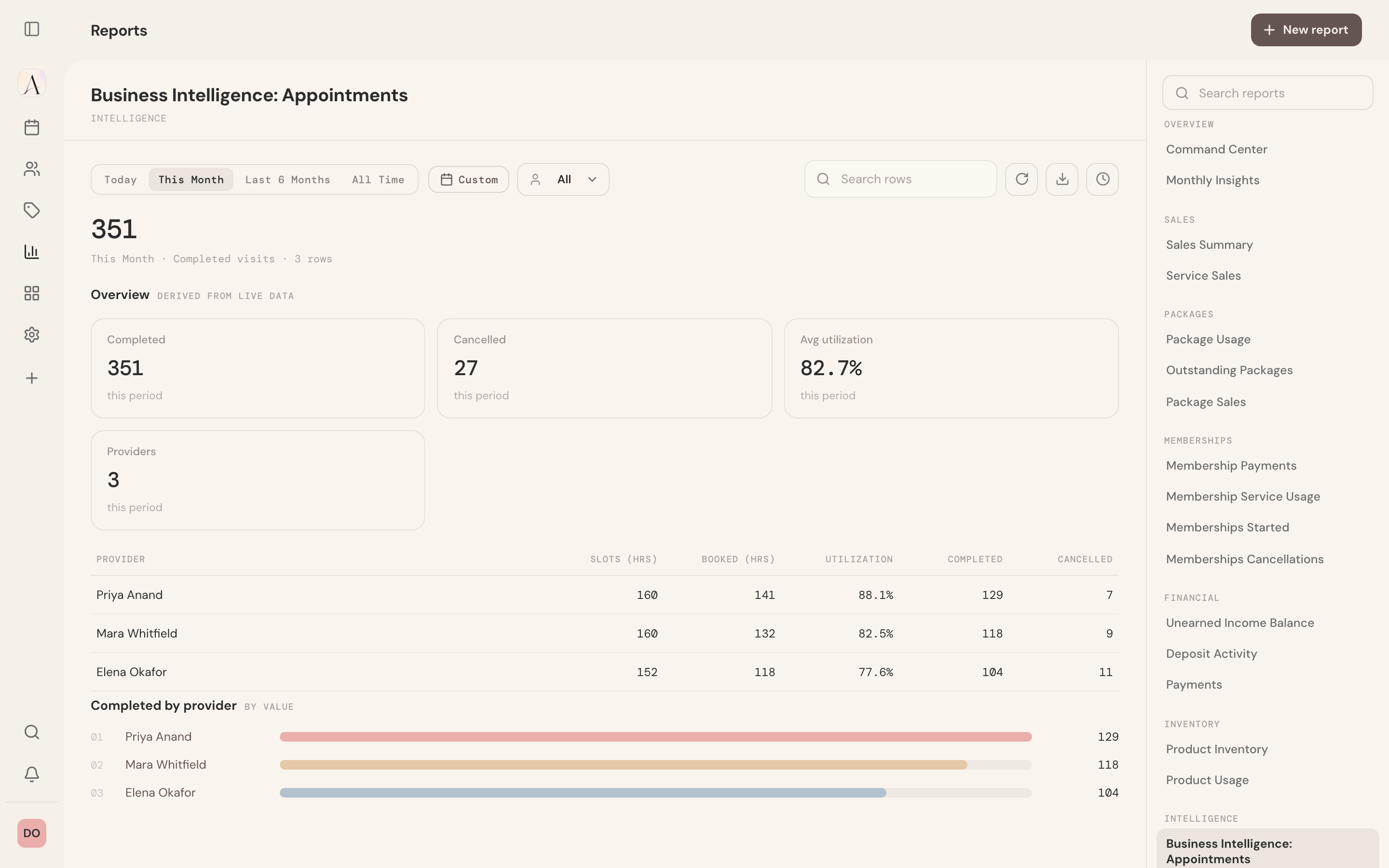
    Booked against available hours, completed against cancelled, provider by provider and against the period before, so whether they came back is a number rather than a feeling.

The conversation side

Four parts.
One conversation.

The inbox your team works in, the flows that send without being asked, the campaigns that go out on purpose, and the consent rules all three obey.

HydraFacial tomorrow 2:15 PM — reply C to confirm
C — see you then!
✓ Delivered · SMS

Inbox & messaging

Every message about a client, on the client

Two-way SMS and email, plus calling with transcription, gathered onto one thread per client with unread triage, an owner per conversation and snooze for anything that needs picking up later.

  • Text and email from one shared inbox
  • Call, and keep what was said on the record
  • Assign, snooze and triage without a second tool
Maya Chen · SMS sent
Priya Patel · email sent
Liam Torres · SMS queued

Reminders & automations

The messages nobody has to remember to send

Flows fire on real clinic events (booked, rescheduled, checked in, completed, lapsed, birthday, invoice sent or paid), each with its own timeline of messages and its enrollment tracked step by step.

  • Trigger on the event, not on a spreadsheet
  • Build the timeline slot by slot
  • Retry a failed send instead of dropping it
61% answered · 34 rebooked

Recall & campaigns

Fill the calendar from the clients you already have

Audiences built from real clinic data, seasonal and birthday templates to start from, scheduled and recurring sends, and attribution that stops at booked revenue rather than at opens and clicks.

  • Build an audience from what the record knows
  • Schedule, repeat, or fire on a trigger
  • Read a campaign against the bookings it produced

Keep the chair full,
not just the day.

Let the booking send its own reminders, and let the ones who drift hear from you before they are gone.

Book a demo